Why This Comparison Matters in 2026
B2B sales and recruitment today are no longer about sending random cold messages. Decision‑makers are harder to reach, inboxes are crowded, and data accuracy matters more than ever. As a result, professionals rely heavily on lead generation tools to find, qualify, and engage the right prospects.
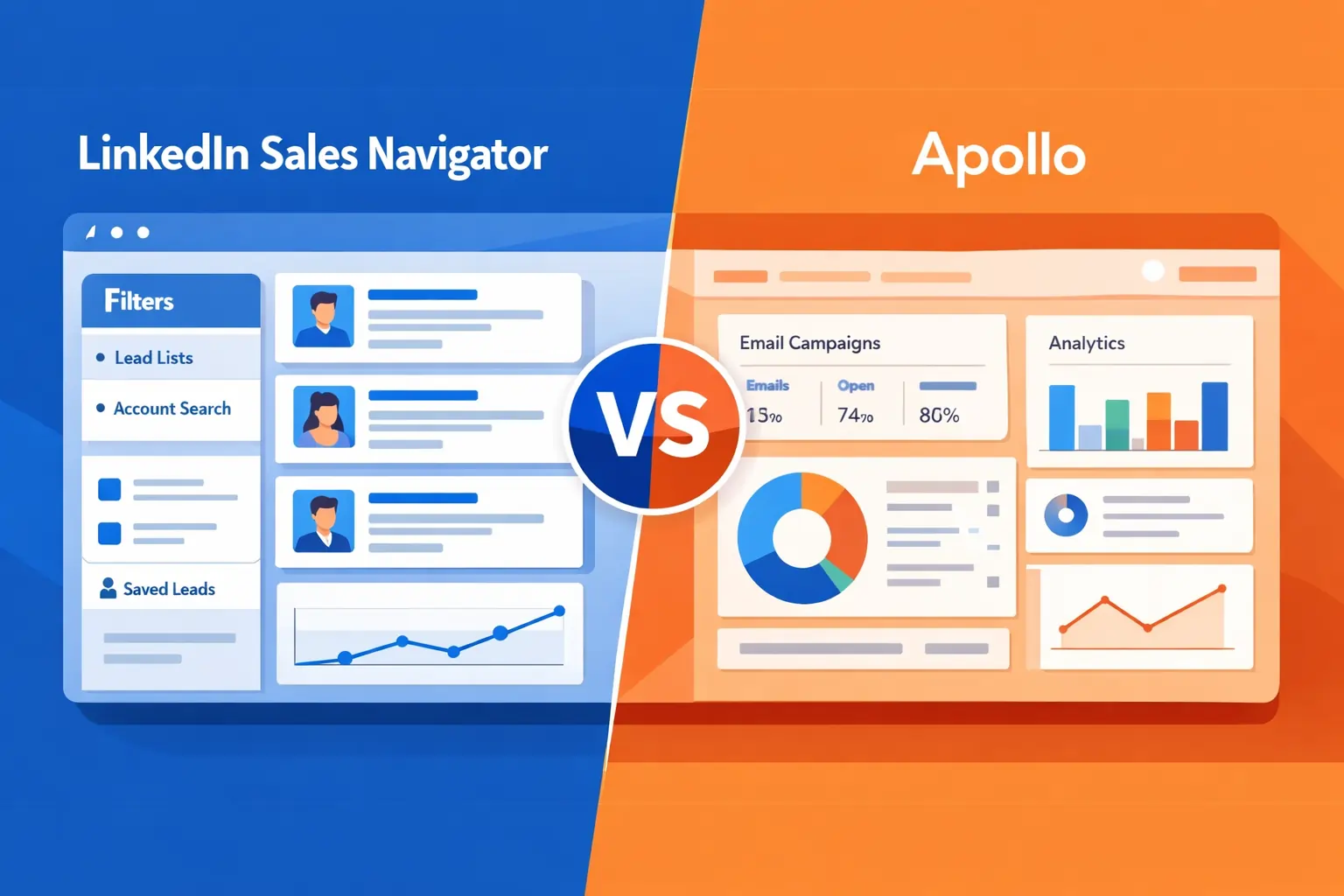
Two names dominate this space: LinkedIn Sales Navigator vs Apollo.
At first glance, both promise better leads and faster outreach. But they are built on very different philosophies. One focuses on LinkedIn‑native relationship selling, while the other emphasizes multi‑channel data and scale.
This article answers one core question honestly:
Which tool is actually better for lead generation – LinkedIn Sales Navigator or Apollo?
🔥 LinkedIn Premium Business Plan 12 Months
Original Price ₹23,000 • Get it ₹8XXX
🤖 Gemini AI Advanced Pro Plan
Original Price ₹19,500 • Get it ₹8XXX
💼 LinkedIn Sales Navigator Core
Original Price ₹80,000 • Get it ₹2XXXX
🎨 Canva Pro Lifetime Access
Original Price ₹3,999 • Get it ₹4XX
📚 Coursera Plus Annual Plan
Original Price ₹33,000 • Get it ₹2XXX
✨ Adobe Creative Cloud All Apps
Original Price ₹59,000 • Get it ₹4XXX
Understanding the Core Difference Between Sales Navigator and Apollo
Before comparing features, it’s important to understand that Sales Navigator and Apollo are not direct replacements for each other.
LinkedIn Sales Navigator is a relationship‑driven prospecting tool built on top of LinkedIn’s own network. It helps you identify and track people already active on LinkedIn.
Apollo, on the other hand, is a data‑driven sales intelligence platform. It combines a large contact database with email outreach, enrichment, and analytics.
So the real comparison is not “which is better,” but which one fits your sales motion better.
What LinkedIn Sales Navigator Is Best At
Sales Navigator is designed for professionals who rely on LinkedIn conversations to close deals or build long‑term relationships.
Its biggest strength is intent‑based prospecting. You are searching people who are already:
- active on LinkedIn
- changing jobs
- engaging with content
- visible in your industry
Sales Navigator allows advanced filters like company size, seniority, role changes, and past interactions. This makes it very effective for high‑value, relationship‑led selling.
Another major advantage is real‑time LinkedIn data. Because Sales Navigator pulls directly from LinkedIn, profile accuracy is generally high.
Also Read – Apollo.io vs PhantomBuster vs Leads.cm: Which B2B Lead Generation Tool Is Actually Worth It in 2026?
🔥 LinkedIn Premium Business Plan 12 Months
Original Price ₹23,000 • Get it ₹8XXX
🤖 Gemini AI Advanced Pro Plan
Original Price ₹19,500 • Get it ₹8XXX
💼 LinkedIn Sales Navigator Core
Original Price ₹80,000 • Get it ₹2XXXX
🎨 Canva Pro Lifetime Access
Original Price ₹3,999 • Get it ₹4XX
📚 Coursera Plus Annual Plan
Original Price ₹33,000 • Get it ₹2XXX
✨ Adobe Creative Cloud All Apps
Original Price ₹59,000 • Get it ₹4XXX
Limitations of LinkedIn Sales Navigator
Despite its strengths, Sales Navigator has clear limitations.
First, it is LinkedIn‑only. You do not get verified email addresses or phone numbers at scale. Outreach is mainly limited to LinkedIn InMail or connection requests.
Second, while Sales Navigator helps you find leads, it does not manage outreach workflows. There is no built‑in email sequencing, no enrichment, and limited automation.
Finally, pricing can feel expensive for startups, especially when you consider that it solves only part of the lead generation process.
What Apollo Is Best At
Apollo is built for scale and efficiency.
Its core strength is its large B2B contact database, which includes verified emails, job titles, company data, and enrichment signals. This makes Apollo extremely attractive for outbound‑heavy teams.
Apollo also supports:
- email sequencing
- engagement tracking
- CRM integrations
- team‑level reporting
This makes it closer to an end‑to‑end outbound sales tool rather than just a prospecting platform.
For teams that rely heavily on cold email and volume‑based outreach, Apollo feels powerful and cost‑effective.
🔥 LinkedIn Premium Business Plan 12 Months
Original Price ₹23,000 • Get it ₹8XXX
🤖 Gemini AI Advanced Pro Plan
Original Price ₹19,500 • Get it ₹8XXX
💼 LinkedIn Sales Navigator Core
Original Price ₹80,000 • Get it ₹2XXXX
🎨 Canva Pro Lifetime Access
Original Price ₹3,999 • Get it ₹4XX
📚 Coursera Plus Annual Plan
Original Price ₹33,000 • Get it ₹2XXX
✨ Adobe Creative Cloud All Apps
Original Price ₹59,000 • Get it ₹4XXX
Limitations of Apollo
Apollo’s biggest challenge is data accuracy at the individual level. While the database is massive, not every email is perfect, and job changes may lag behind LinkedIn updates.
Another limitation is weaker social context. Apollo does not show real‑time engagement or relationship depth like LinkedIn does. You know who the person is, but not how active or receptive they are.
For high‑trust or relationship‑based selling, this lack of context can matter.
Sales Navigator vs Apollo- Lead Quality Comparison
Lead quality depends on how you sell.
Sales Navigator produces high‑intent, high‑context leads. You can see mutual connections, recent activity, and professional history. This leads to more personalized outreach and higher response quality.
Apollo produces high‑volume, scalable leads. You get access to more contacts faster, but with less context about intent or engagement.
If you value quality over quantity, Sales Navigator has the edge.
If you value speed and scale, Apollo wins.
Sales Navigator vs Apollo Pricing (Reality Check)
Pricing is often the deciding factor.
Sales Navigator pricing is premium and typically increases with team features. For startups, this can feel heavy, especially since email outreach still requires other tools.
Apollo, in comparison, offers more flexible pricing tiers, including affordable plans for startups and growing teams. When you consider email, data, and outreach together, Apollo often delivers more value per dollar.
This is why Apollo is popular among budget‑conscious startups and outbound teams.
Sales Navigator vs Apollo for Startups
For startups, the decision depends on stage.
Early‑stage startups often benefit more from Apollo because:
- budget is limited
- outbound volume matters
- speed of experimentation is important
Sales Navigator becomes more valuable once startups:
- sell higher‑ticket deals
- target specific decision‑makers
- rely on trust‑based selling
Many successful startups actually use both as they scale.
Also Read – What Is LinkedIn for Business? The Growth Channel Most Brands Ignore
Sales Navigator vs Apollo for Recruiters
Recruiters tend to prefer Sales Navigator.
Recruiting is relationship‑heavy and LinkedIn‑centric. Sales Navigator helps recruiters track role changes, hiring trends, and candidate activity more accurately.
Apollo can support recruiters with contact data, but it lacks LinkedIn‑native signals that are critical in recruitment workflows.
For recruiters, Sales Navigator generally feels more natural and reliable.
Sales Navigator vs Apollo for Sales Teams
Sales teams focused on:
- enterprise deals
- account‑based selling
- long sales cycles
often prefer Sales Navigator.
Teams focused on:
- outbound SDR motions
- cold email campaigns
- pipeline volume
usually prefer Apollo.
Again, the tool should match the sales strategy, not the other way around.
Accuracy: LinkedIn vs Apollo Data
Accuracy is where LinkedIn holds an advantage.
Because Sales Navigator pulls from LinkedIn profiles, job titles and company updates are usually more current.
Apollo relies on third‑party data aggregation, which is excellent at scale but occasionally outdated at the individual level.
For personalized outreach, Sales Navigator feels safer.
For bulk outreach, Apollo is usually “accurate enough.”
Also Read – LinkedIn Premium vs Sales Navigator: Which LinkedIn Plan Is Best for You in 2026?
Pros and Cons Summary
LinkedIn Sales Navigator – Pros
- High‑intent LinkedIn data
- Excellent filtering and context
- Ideal for relationship‑based selling
- Strong for recruiters and enterprise sales
LinkedIn Sales Navigator – Cons
- Expensive
- No built‑in email outreach
- LinkedIn‑only channel
Apollo – Pros
- Large contact database
- Email + outreach included
- Startup‑friendly pricing
- Great for outbound scale
Apollo – Cons
- Less social context
- Data accuracy varies
- Weaker for relationship selling
Which Tool Is Better for B2B Lead Generation?
There is no single winner – but there is a right choice for each use case.
Choose LinkedIn Sales Navigator if:
- you sell high‑value B2B services
- relationships matter more than volume
- LinkedIn is your primary channel
Choose Apollo if:
- you run outbound sales campaigns
- email is your main channel
- budget and scale matter
Many advanced teams combine both:
Sales Navigator for who to target, Apollo for how to reach them at scale.
Final Verdict: Sales Navigator vs Apollo
Sales Navigator is about precision and trust.
Apollo is about speed and scale.
The best lead generation tool is not the most popular one – it’s the one that aligns with your sales motion, deal size, and growth stage.
Final Thought
Instead of asking “Sales Navigator or Apollo?”, ask:
How do we actually sell – and what tool supports that best?
Answer that honestly, and the decision becomes obvious.
Frequently Asked Questions (FAQs)
1. Is LinkedIn Sales Navigator better than Apollo?
It depends on your sales approach. LinkedIn Sales Navigator is better for relationship‑based selling and LinkedIn outreach, while Apollo works better for scalable outbound campaigns using email and data‑driven prospecting.
2. Which tool is better for startups: Sales Navigator or Apollo?
For early‑stage startups, Apollo is often more suitable because it offers email outreach, contact data, and flexible pricing. Sales Navigator becomes more useful as startups move toward higher‑value, relationship‑driven sales.
3. Can Sales Navigator and Apollo be used together?
Yes. Many sales teams use Sales Navigator to identify high‑intent prospects on LinkedIn and Apollo to run email outreach and manage outbound campaigns at scale.
4. Which tool provides more accurate data?
Sales Navigator generally offers more up‑to‑date role and company information because it uses LinkedIn’s native data. Apollo provides large‑scale contact data, which is accurate for most use cases but may occasionally lag behind real‑time profile updates.
5. Is Apollo cheaper than LinkedIn Sales Navigator?
In most cases, yes. Apollo offers more affordable plans, especially for startups and small teams, while Sales Navigator is priced as a premium LinkedIn product.
6. Which tool is better for recruiters?
Recruiters usually prefer LinkedIn Sales Navigator because it provides better visibility into candidate profiles, job changes, and LinkedIn activity.
7. Does LinkedIn Sales Navigator include email outreach?
No. Sales Navigator focuses on LinkedIn prospecting and InMail. For email outreach, users typically need an additional tool.
8. Is Apollo suitable for enterprise sales?
Apollo works well for outbound‑focused enterprise teams, but Sales Navigator is often preferred for account‑based selling and long sales cycles where relationship context matters.
9. Which tool is more beginner‑friendly?
Sales Navigator is easier to start with if you already use LinkedIn. Apollo has a slightly steeper learning curve because it includes more features like sequencing and analytics.
10. Which tool delivers faster lead generation results?
Apollo usually delivers faster results for volume‑based outreach. Sales Navigator delivers better results for personalized, high‑quality conversations.